Suggested Meta Description: Find the best AI writer for SEO in 2026. Compare top AI SEO writing tools built for keyword optimization, content briefs, and higher Google rankings.
A blogger once spent six months writing articles nobody found. Good grammar, clean formatting, real effort. Still, nothing showed up on Google's first page. Then she switched her approach and started writing with real search data behind every article. Traffic tripled within three months.
That story shows the real gap in most content today. Good writing is not the same thing as writing for search engines. A great AI writer for SEO closes that gap. It builds content around real keyword data, real search intent, and real competitor research, not just good sentences.
This guide covers the best AI writer for SEO tools available right now. Each tool gets compared on features, pricing, and real ranking power. By the end, you will know exactly which SEO writing tool fits your website and your budget.
What Makes an AI Writer "SEO-Focused"?
A general AI writer, like a basic chatbot, produces text based on a prompt alone. An AI writer built for SEO does something extra. It studies real search results before writing a single word.
Search engines reward content that matches what readers actually search for. An SEO-focused tool pulls data straight from Google's top-ranking pages for a target keyword. Headers, word count, related terms, and common questions all get analyzed automatically.
This research turns into a content brief or outline. The AI then drafts an article that follows this data-backed structure, rather than guessing at what readers want. The final result stands a far better chance of ranking, since it matches real search patterns instead of random assumptions.
A content score often comes built into these tools too. This score compares your draft against top-ranking competitors in real time, and it updates as you add keywords, headers, and related terms throughout the writing process.
Why SEO Writing Tools Matter for Website Traffic
Organic search still drives more website traffic than almost any other channel. A single well-ranked article can pull in visitors for years, long after the writing work finishes.
A rank on Google takes more than good writing though. Google's algorithm checks for topic depth, related terms, and a structure that answers real search questions. A plain, unoptimized article often loses to a shorter, better-optimized competitor.
Manual SEO research eats up serious time. A full study of ten competitor articles, with headers pulled out and keyword density checked by hand, can take an entire afternoon before writing even starts. An SEO writing tool cuts this research down to a few minutes.
Small website owners and affiliate marketers feel this benefit the most. A single person managing an entire content calendar cannot compete with a large team on manual research alone. AI SEO writers level that playing field considerably.
A newer trend adds even more weight to this category. AI search engines like ChatGPT, Perplexity, and Google's AI Overviews now answer questions directly, often without sending a single click to the original website. Content built with real structure and clear answers gets cited more often inside these AI-generated responses, a practice often called Generative Engine Optimization, or GEO.
Best AI Writer for SEO Tools in 2026
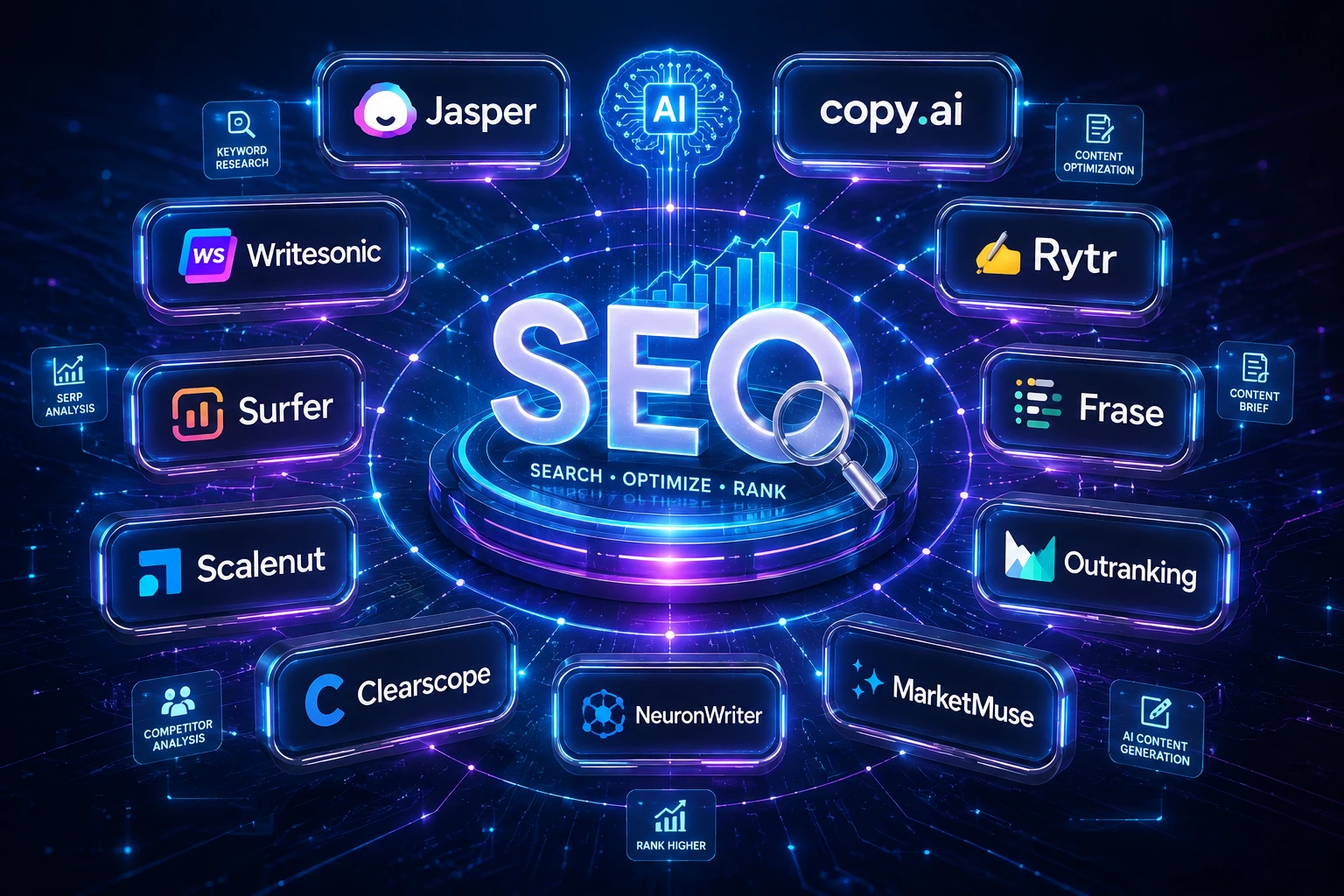
The list below covers the strongest SEO-focused writing tools on the market, reviewed for real features, pricing, and everyday usefulness.
1. Surfer SEO
Surfer SEO built its entire reputation around one core feature: real-time content scoring. Every sentence you write gets checked against live data pulled from top-ranking pages for your target keyword.
A content editor sits at the center of this tool. Green, yellow, and red highlights show exactly which terms appear too often, too rarely, or not at all compared to competitors. This visual feedback removes the guesswork from on-page optimization.
An AI writing assistant now lives inside Surfer too, drafting full sections directly within the same optimized editor. Writers no longer need to copy content back and forth between separate apps.
The price starts around eighty-nine dollars a month for solo users, with higher tiers built for teams and agencies handling larger content volumes.
Best for: Writers who want live, visual feedback on keyword optimization while drafting.
2. Frase
Frase takes a research-first approach to SEO writing. A full content brief gets built from live SERP analysis before any drafting begins, pulling in real headers, questions, and related terms from top-ranking competitors.
Questions people actually search for show up automatically inside every brief, sourced from real search data rather than guesswork. This feature alone saves hours of manual research on Google and forums like Reddit or Quora.
Section-by-section drafting keeps writers inside the same research framework throughout the entire article. A built-in content score tracks progress against the brief as you write.
Best for: Writers who want deep competitive research built into their brief before the writing starts.
3. Jasper AI (with Surfer SEO Integration)
Jasper combines strong general writing ability with a direct Surfer SEO integration. Real-time content scoring appears inside the Jasper editor itself, without switching between two separate tools or browser tabs.
Brand voice settings remain a major strength here too. Teams publishing SEO content across multiple writers keep a consistent tone, which matters for larger content operations with strict style standards.
A wide template library covers blog posts, meta descriptions, and structured outlines built specifically for search performance.
The Creator plan costs around forty-nine dollars a month, with higher tiers for teams needing more volume and collaboration features.
Best for: Marketing teams with high content volume and strict brand standards who still want SEO scoring built in.
4. Scalenut
Scalenut bundles a full content planning suite alongside its AI writer. A Content Planner tool scans top-ranking articles on a topic, then pulls out key terms, heading structures, and content ideas automatically.
Real-time SEO scoring guides the writing process from start to finish. Sections can get expanded, shortened, or rephrased with a single click, which speeds up editing considerably.
A standout feature called Fix It auto-optimizes an entire document in one click, adjusting missing keywords and structural gaps automatically.
A monthly plan around twenty dollars includes 100,000 words and five full SEO articles.
Best for: Budget-conscious writers who want planning, drafting, and optimization bundled into one affordable tool.
5. Writesonic
Writesonic covers a broad content mix beyond blog posts alone, including landing pages, ad copy, and product descriptions, all built with SEO structure in mind.
A companion tool called Chatsonic pulls live data from Google Search during the writing process. This reduces the risk of outdated facts or stale information inside a published article, which matters for topics that change often.
SEO Writing Mode adds on-page optimization guidance directly during drafting, helping writers align content with search intent and target keywords as the article takes shape.
Best for: Teams that need one tool covering multiple content formats beyond standard blog articles.
6. NeuronWriter
NeuronWriter focuses tightly on content optimization backed by real NLP analysis. Target keywords, related terms, and competitor content all get broken down into a clear, actionable checklist.
A more affordable price point sets NeuronWriter apart from some competitors on this list. Plans start around twenty-three dollars a month, which suits freelance writers and small business owners managing their own content.
Best for: Freelancers and small business owners who need real optimization data without premium pricing.
7. Semrush Content Toolkit
Semrush brings one of the largest keyword databases in the industry into its content writing tools. Over twenty-five billion keywords sit behind every content recommendation this platform makes.
Keyword research, competitor analysis, and content generation all live inside one connected platform here. Teams already using Semrush for other SEO tasks gain a real workflow advantage, since everything stays in one dashboard.
The price starts around sixty dollars a month, though entry-level plans include only a limited number of AI-assisted articles.
Best for: Teams already inside the Semrush ecosystem who want writing tied directly to the same keyword data.
How to Choose the Right AI Writer for SEO
A short checklist narrows the field down fast, based on your specific goals and budget.
Do you want real-time scoring while you write? Surfer SEO and Jasper (with its Surfer integration) both offer live, visual feedback as you draft.
Do you want deep research done before drafting starts? Frase builds a full content brief from live SERP data before a single sentence gets written.
Is budget your biggest concern? Scalenut and NeuronWriter both offer strong optimization features at a lower monthly price than premium competitors.
Do you need more than blog content? Writesonic covers ad copy, landing pages, and product descriptions alongside standard SEO articles.
Are you already using an SEO platform? Semrush users gain the most value from Semrush Content Toolkit, since it pulls from the same keyword database already in use.
Key Features Every AI SEO Writer Should Offer
A strong SEO writing tool covers more ground than plain content generation. A few core features separate the best platforms from basic chatbots.
- SERP analysis: Real data from top-ranking pages, pulled automatically for your target keyword.
- Content briefs and outlines: A structured plan built before drafting starts, based on real competitor research.
- Keyword and NLP suggestions: Related terms and entities that search engines expect to see inside a well-optimized article.
- Real-time content scoring: Live feedback comparing your draft against top competitors as you write.
- Readability checks: Simple sentence structure and clear formatting, which both readers and search engines reward.
- Meta title and description generation: Search-friendly titles and descriptions built alongside the main article.
A tool missing several of these features works more like a general writer than a true SEO specialist, even if it markets itself under an SEO label.
AI SEO Writers for Affiliate Marketing Content
Affiliate websites depend entirely on organic search traffic in most cases. A product review or comparison article buried on page five of Google earns almost nothing, no matter how well it gets written.
An SEO-focused AI writer gives affiliate content a real fighting chance against bigger, more established competitors. Content briefs reveal exactly what already ranks for a target product keyword, including common questions buyers ask before purchasing.
Real product details still need a human touch though. Specific features, honest pros and cons, and personal testing notes build the trust that convinces a reader to click an affiliate link. A generic AI paragraph about a product rarely closes a sale on its own.
A strong workflow blends both sides well. Let the SEO tool handle keyword research, structure, and a strong first draft. Add real product knowledge, screenshots, and honest opinions on top of that foundation. This combination produces content that both ranks well and actually converts readers into buyers.
Free vs Paid AI SEO Writers
Free trials exist across most tools on this list, though full free plans stay rare in this specific category. SEO data costs money to license and update, so most platforms charge from day one, even at a low starting tier.
A short free trial still helps enormously before any commitment. A quick test of one target keyword through two or three different tools reveals real differences in content brief quality and writing style within a single afternoon.
Paid plans open up the real value in this category. Higher word limits, more content briefs per month, and team collaboration features all sit behind a subscription, once a free trial period ends.
A simple rule works well for new users. Start with the cheapest plan that covers your real monthly article count. Move up a tier only once that limit gets hit consistently, month after month.
SEO Writing Tools vs General AI Writers
A general AI writer like a basic chatbot works fine for many writing tasks. Emails, social captions, and quick brainstorming all come together well without any special SEO features attached.
A ranked article needs more than general writing skill though. A basic chatbot has no access to live search data, competitor rankings, or real keyword volume. It writes from training data alone, without checking what actually performs on Google today.
An SEO-focused tool closes this exact gap. Live data replaces guesswork at every stage, from the initial content brief through the final content score. This difference shows up directly in search rankings over time, even when both tools produce grammatically perfect writing.
A smart approach often combines both types of tools. A general AI writer works well for supporting content, like social posts or email newsletters. A dedicated SEO writer handles the core blog articles meant to drive long-term organic traffic. The right tool matched to its strongest use case produces the best overall results across an entire content strategy.
Common Mistakes to Avoid With AI SEO Writers
Many writers stuff keywords unnaturally after seeing a low content score. Readers notice awkward, repetitive phrasing fast, and Google's algorithm has grown smart enough to penalize this pattern too.
A perfect content score does not guarantee a perfect article either. Some writers chase a hundred percent optimization score while ignoring basic readability and natural flow. A slightly lower score with clear, natural writing usually outperforms a technically perfect but robotic-sounding draft.
A skipped content brief wastes the tool's biggest advantage entirely. Writers who draft first and check SEO scores later miss the real value these platforms offer, since the brief exists to guide structure from the very first sentence.
Fact-checking gets ignored too often as well. AI tools sometimes generate wrong statistics or outdated claims with full confidence. Every number, date, and product detail deserves a quick manual check before publishing, especially for money-focused affiliate content.
A published article with zero human edits remains the biggest mistake overall. Flat, generic AI output rarely earns real trust from readers, even when it technically ranks well for a short period.
Tips to Get Better SEO Results From Any AI Writer
Specific target keywords produce far stronger briefs than broad, vague topics. A request built around "best budget wireless earbuds under fifty dollars" gives the tool far more to work with than a plain "write about earbuds."
Real competitor research still matters, even with an AI tool doing most of the work. A quick manual look at the top three ranking articles reveals gaps and opportunities that automated tools sometimes miss.
Short paragraphs and clear headers help both readers and search engines understand an article fast. Long, dense blocks of text hurt readability scores and often increase bounce rates on a live website.
Internal links between related articles on your own site boost SEO performance too. An AI writer rarely adds these automatically, so a manual pass after drafting catches this easy, high-value optimization step.
Every draft still needs a real, careful edit before publishing. Small changes, a tightened sentence here, a natural keyword placement there, turn a technically optimized draft into content that actually sounds like a real person wrote it.
How Generative Engine Optimization Fits In
AI search tools now answer questions directly, without always sending traffic to a website. ChatGPT, Perplexity, and Google's AI Overviews all pull information from published content, then summarize it inside their own answers.
Generative Engine Optimization, often shortened to GEO, focuses on getting cited inside these AI-generated answers. Clear structure, direct answers near the top of an article, and well-organized facts all improve the odds of a citation.
Several tools on this list now build GEO features directly into their SEO workflow. Content structured to answer a question clearly, in plain language, tends to perform well across both traditional Google rankings and AI-generated summaries at the same time.
A website chasing only traditional SEO risks missing a growing share of search traffic. Search behavior keeps shifting toward these AI-powered answers, and content built for clarity now serves both audiences at once, human readers and AI models alike.
Frequently Asked Questions
Can an AI writer really help content rank on Google? Yes, when paired with real SERP data and proper editing. The AI handles research and structure fast, but genuine ranking success still depends on quality, accuracy, and real reader value.
Which AI writer for SEO works best for beginners? Scalenut and NeuronWriter both offer simple interfaces and lower starting prices, which suits beginners still learning how SEO content works.
Do these tools replace the need for keyword research? Most SEO writing tools include built-in keyword research as part of the content brief process. A dedicated keyword tool like Semrush still helps for broader site-wide strategy though.
Is a high content score the same as good SEO? Not exactly. A strong content score reflects on-page optimization only. Backlinks, site speed, and overall domain authority all affect rankings too, alongside the content itself.
How much does a good AI SEO writer cost per month? Prices range from around twenty dollars a month for budget tools like Scalenut, up to ninety dollars or more for premium platforms like Surfer SEO, depending on features and content volume needed.
The Bottom Line
The best AI writer for SEO turns raw writing into content built for real search performance. Surfer SEO leads on live, visual scoring. Frase wins on deep research before drafting begins. Jasper suits teams that want brand consistency alongside SEO features. Scalenut and NeuronWriter serve budget-conscious writers well. Writesonic covers a wider content mix, and Semrush Content Toolkit fits teams already inside that ecosystem.
Your best pick depends on your budget, your content volume, and how deep your research needs run. Test a free trial first, always. Notice how well a tool's workflow matches your own writing habits before committing to a paid plan.
Real ranking success still comes down to real value for readers, no matter which tool sits behind the first draft. The AI builds the structure and speeds up the research. You bring the honesty, the real product knowledge, and the genuine answers that turn a search click into a loyal reader.